How the Work Works
The Tools of the Trade
You don't choose the tools. That's Nikki's job. Each session, she reads what your body needs and draws from her full toolkit accordingly. Here's what's in it.
Every session is integrative.
The modality follows the body.
Most therapeutic practices hand you a menu and ask you to diagnose yourself. That's backwards. You know where it hurts. Nikki knows why, and which combination of techniques will actually address it. The tools below aren't options you select. They're a toolkit she deploys based on what she reads in your body on the day you come in.
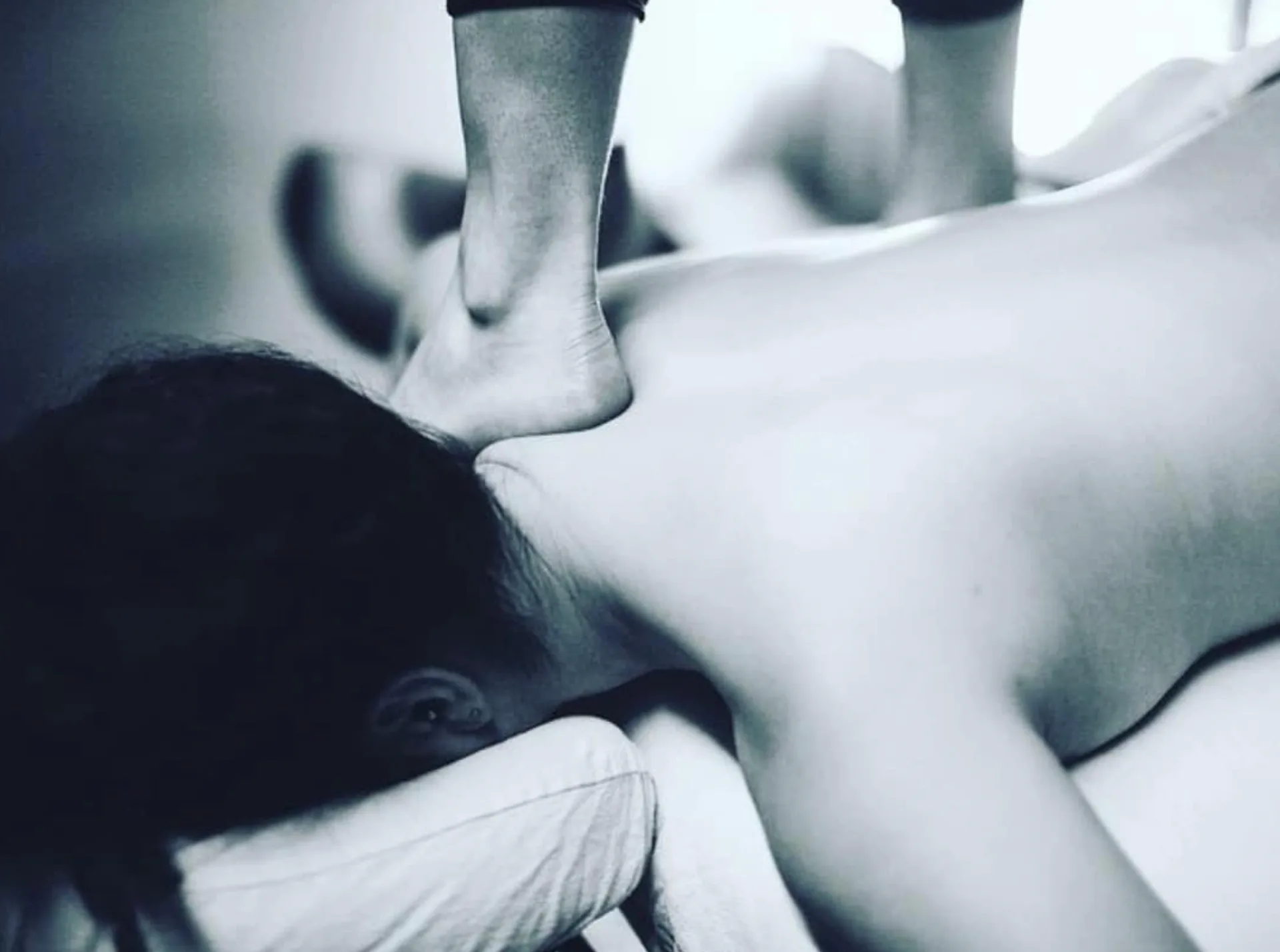
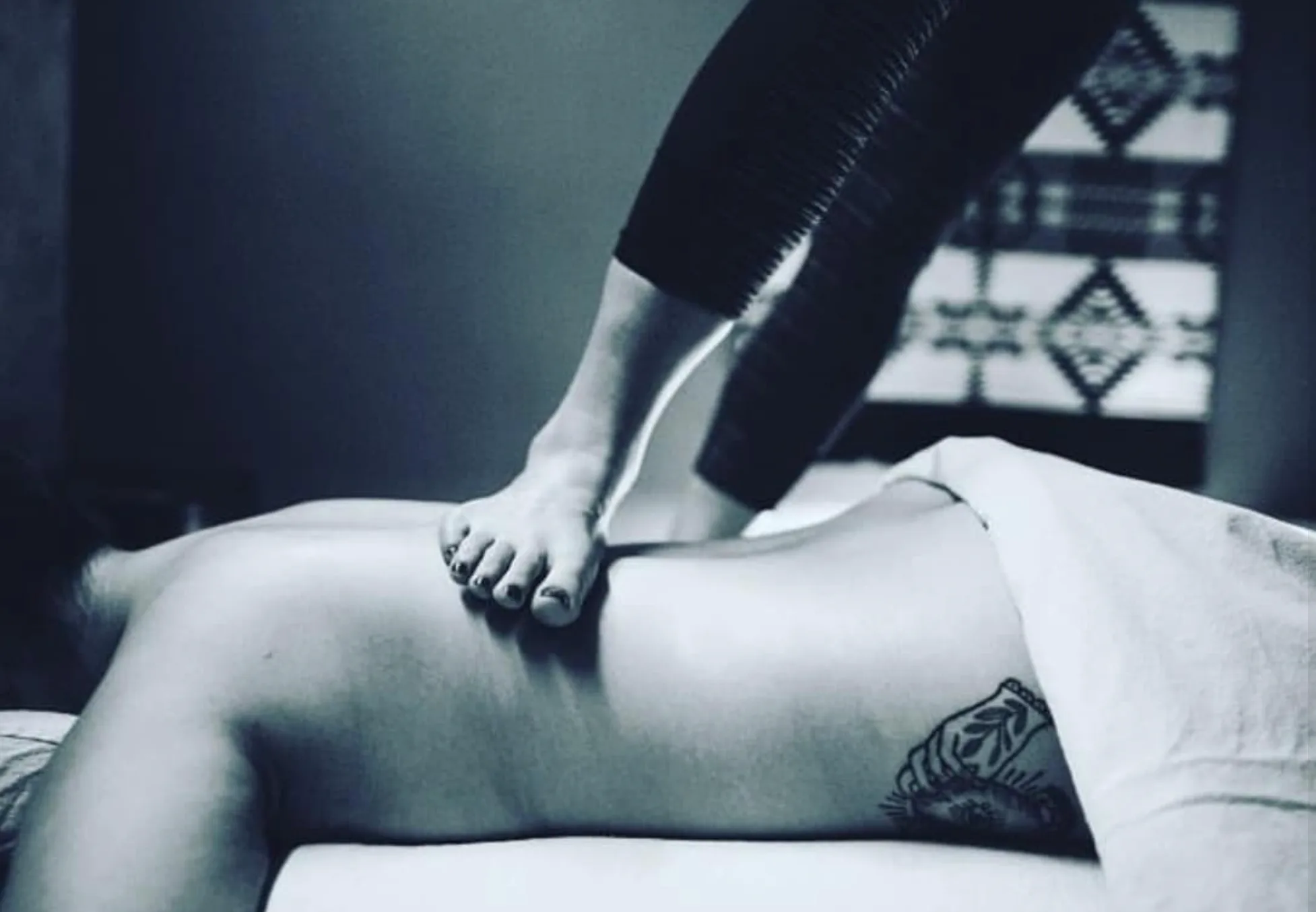
Ashiatsu (Barefoot Massage)
What It Is
Massage performed with the feet, supported by overhead bars, instead of the hands. One of very few practitioners of this technique in Northern Michigan.
What It Does
Delivers sustained, consistent pressure that hands cannot replicate. The contact surface of the foot allows for broader, deeper, more evenly distributed pressure, reaching tissue and holding it in ways that simply aren't possible with hand technique. Deeper, more consistent pressure, tolerated by the body in a completely different way than fingers, which can be jarring or even inflammatory to the muscles.
Who It's For
Anyone who has spent years asking for deeper and never found it. Particularly effective for dense muscle tissue, chronic fascial restriction, and full-body work.
"The deepest most comfortable pressure ever. 1st time doing this type of massage and I can't wait for my next one."
— Matt Schram
"The ashiatsu modality feels like you have 2 people giving you a massage!"
— Danielle P.
Deep Tissue Massage
What It Is
Targeted manual therapy that works through surface layers to address deeper muscle tissue and chronic tension patterns.
What It Does
Breaks down adhesions, reduces chronic holding patterns, and restores mobility to muscles that have been locked in compensation. Real deep tissue work isn't about pressure; it's about knowing what's holding the tension and why.
Who It's For
Athletes, active people with overuse patterns, anyone carrying chronic tension that lighter work hasn't touched.
You don't need to know which technique fits. That's the work.
Book a SessionMyofascial Release
What It Is
Manual therapy targeting the fascial system, the connective tissue that surrounds every muscle, bone, nerve, and organ in the body.
What It Does
Fascia responds to sustained, gentle-to-moderate pressure differently than muscle. When restricted, it creates patterns of tension that don't release under standard deep tissue technique. Myofascial work addresses those patterns directly: slower, more specific, and often what unlocks the thing that nothing else has touched.
Who It's For
Anyone with restricted movement, chronic pain that keeps returning, or tension that feels deep but diffuse rather than in one specific muscle.
Cupping Therapy
What It Is
Silicone or glass cups applied to the skin to create negative pressure (suction) within the tissue.
What It Does
While most bodywork pushes down into tissue, cupping lifts. The suction creates space within the fascia and muscle layers, draws fresh circulation into restricted areas, and can break up adhesions that compression-based work can't reach.
Who It's For
Particularly effective for myofascial restriction, chronic tension that feels stuck, and areas where circulation and tissue hydration are poor.
The right tool meets the body where it is. That's why Nikki picks.
Book a SessionGua Sha
What It Is
Instrument-assisted soft tissue mobilization using a smooth-edged tool applied with pressure along muscle and fascial planes.
What It Does
Creates therapeutic microtrauma that triggers the body's healing response, breaking down scar tissue and fascial adhesions, improving tissue mobility, and increasing local blood flow to chronically restricted areas.
Who It's For
Effective for chronic muscle tension, restricted range of motion, scar tissue, and areas where fascial layers have adhered together from overuse or old injury.
Ready?
You show up.
She takes it from there.
When you book a session, you don't select a modality. You tell Nikki what you're working with: where you've been, what you're feeling, what hasn't worked. She does the assessment and makes the call. That's what 13 years of practice looks like.
Book a Session